Page Text
            Capitola
STREET STYLE
Classic
Interview by Jake
Outerview by Kurt
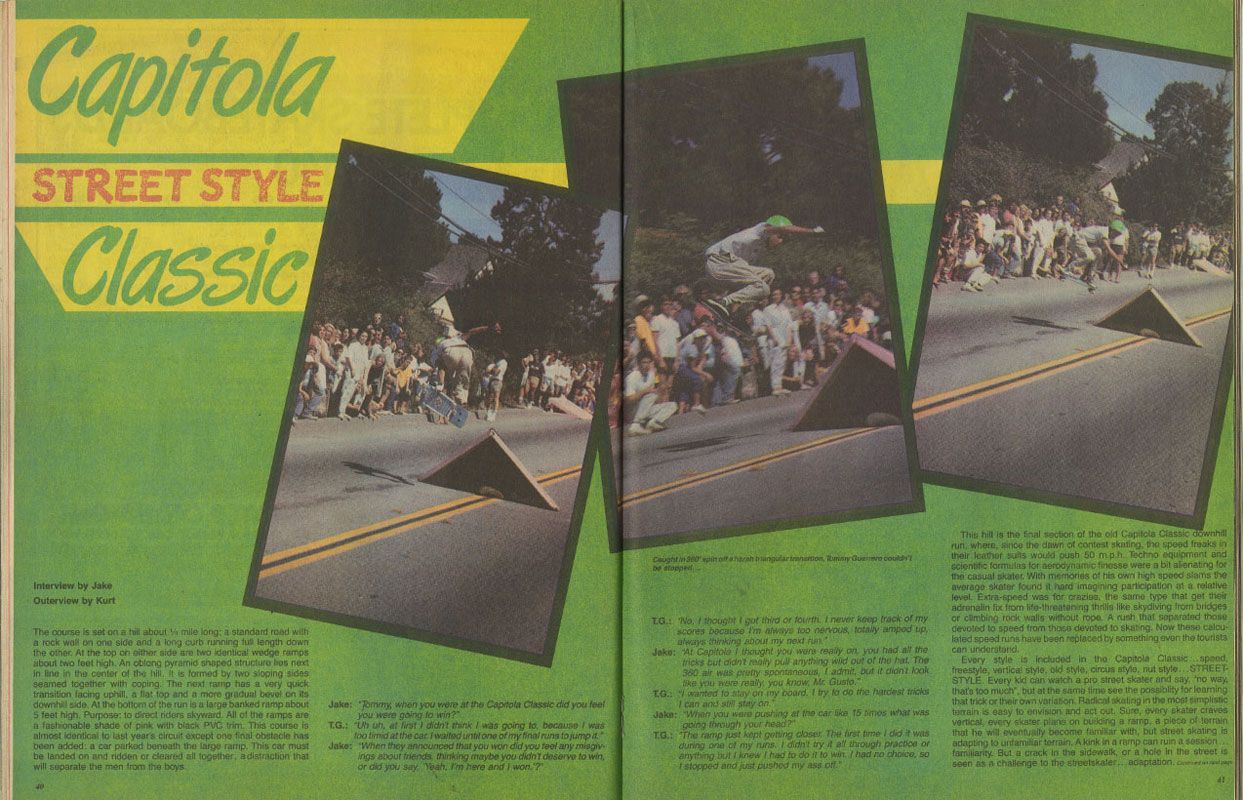
The course is set on a hill about ½ mile long; a standard road with
a rock wall on one side and a long curb running full length down
the other. At the top on either side are two identical wedge ramps
about two feet high. An oblong pyramid shaped structure los next
in line in the center of the hill. It is formed by two sloping sides
seamed together with coping. The next ramp has a very quick
transition facing uphill, a flat top and a more gradual bevel on its
downhill side. At the bottom of the run is a large banked ramp about
5 feet high. Purpose: to direct riders skyward. All of the ramps are
a fashionable shade of pink with black PVC trim. This course is
almost identical to last year's circuit except one final obstacle has
been added: a car parked beneath the large ramp. This car must
be landed on and ridden or cleared all together, a distraction that
will separate the men from the boys
Jake: Tommy, when you were at the Capitola Classic did you feel
you were going to win?"
TG.: "Uh uh, at first I didn't think I was going to, because I was
too timid at the car. I waited until one of my final runs to jump it
Jake: When they announced that you won did you feel any misgiv
ings about friends, thinking maybe you didn't deserve to win,
or did you say Yeah. I'm here and I won."?"
Caught in 300pin off aharah triangular tmnation, by Guerrero could'
be stopped
TG.: "No, I thought I got third or fourth. I never keep track of my
scores because I'm always too nervous, totally amped up,
always thinking about my next run
Jake: At Capitola I thought you were really on, you had all the
tricks but didn't really pull anything wild out of the hat. The
380 air was pretty spontaneous, I admit, but it didn't look
like you were really, you know, Mr. Gusto."
TG.:
wanted to stay on my board. I try to do the hardest tricks
I can and still stay on
Jake: "When you were pushing at the car like 15 times what was
going through your head?"
TG.: The ramp just kept getting closer. The first time I did it was
during one of my runs. I didn't try it all through practice or
anything but I knew I had to do it to win. I had no choice, so
I stopped and just pushed my ass off."
This hill is the final section of the old Capitola Classic downhill
run, where, since the dawn of contest skating, the speed freaks in
their leather sults would push 50 mp.h. Techno equipment and
scientific formulas for aerodynamic finesse were a bit alienating for
the casual skater. With memories of his own high speed slams the
average skater found it hard imagining participation at a relative
level. Extra-speed was for crazies, the same type that get their
adrenalin fix from life-threatening thrills like skydiving from bridges
or climbing rock walls without rope. A rush that soparated those
devoted to speed from those devoted to skating. Now these calcu
lated speed runs have been replaced by something even the tourists
can understand.
Every style is included in tho Capitola Classic...speed,
freestyle, vertical style, old style, circus stylo, nut style...STREET
STYLE Every kid can watch a pro street skater and say, 'no way
that's too much", but at the same time see the possiblity for learning
that trick or their own variation. Radical skating in the most simplistic
terrain is easy to envision and act out. Sure, overy skater craves
vertical, every skater plane on building a ramp, a piece of terrain
that he will eventually become familiar with, but street skating is
adapting to unfamiliar torrain. A kink in a ramp can ruin a session.
familiarity. But a crack in the sidewalk, or a hole in the street is
seen as a challenge to the streetskaler... adaptation, o